Logistics 4.0: building the 3PL of the future with technology
In 3PL logistics technology, 3 tools matter: the automated warehouse, a unified data platform and artificial intelligence that forecasts, reroutes and prepares your team's work. Without the data platform, the other 2 remain theoretical.

Scarce labour, a costly last mile, unpredictable markets: the challenges facing the 3PL sector are well known. What's changing is the tools to meet them.
It's called Logistics 4.0: technologies that take a 3PL from solving problems day to day to a supply chain that sees problems coming. Here are the 3 that matter, and the order in which they pay off.
And AI is no longer limited to forecasts and routes. It's also moving into the office: customer service, dispatch and billing.
The automated warehouse: more throughput, fewer errors.
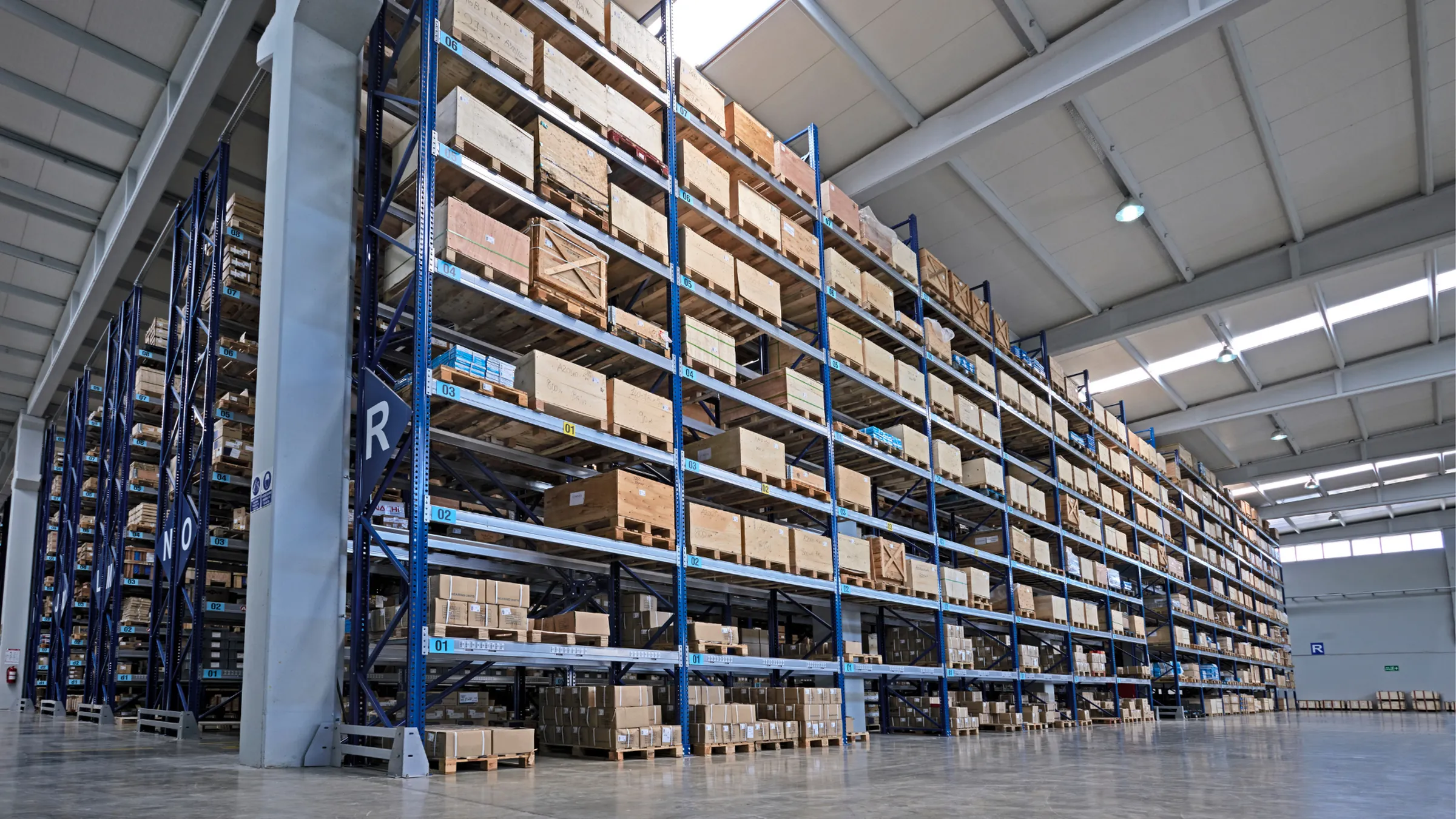
The automated warehouse responds directly to 2 pressures: the labour shortage and the speed e-commerce demands. Autonomous mobile robots (robots that move around the warehouse on their own to bring the goods) and high-speed sorting systems drive productivity up.
Machines can run 24 hours a day, 7 days a week. Their precision reduces errors, and worker safety is clearly improved. The upfront investment is substantial: companies that invest in mobile robots may need to wait 2 to 3 years on average to see a return, according to Interact Analysis, quoted by CFO Dive in 2024.
The real value isn't just lower costs: it's a more agile operation that can grow without rebuilding everything.
How is artificial intelligence changing logistics?
Artificial intelligence (AI) is no longer a buzzword in the sector: according to the 2025 Annual Third-Party Logistics Study by NTT DATA, Penske and Penn State, up to 74% of shippers say they could switch 3PL providers over AI capabilities. The uses are already concrete.
Next comes a supply chain that sees problems coming and prepares the response. A digital twin is a virtual copy of your supply chain: you can simulate a storm, a closed road or a surge in orders on it without any risk to real operations. AI agents, for their part, handle a task from start to finish: they spot a delay, compare the other routes, prepare the rerouting and the message to the customer.
They could do it all on their own. We recommend instead that someone on your team approve before anything goes out: the agent handles the hand-offs, your team keeps the decisions that matter.
A 3PL no longer sells just transportation: it sells resilience.
Examples
- Demand forecasting: models incorporate external data, such as the weather or social media trends, to forecast more accurately.
- Route optimization: routes are recalculated in real time, which cuts fuel use and increases the number of possible deliveries.
- Digital twin: a disruption is tested on the virtual copy before it reaches the real road.
- AI agent: a delay is detected, a new route is proposed, a person approves it and the customer is notified.
What is AI already doing in a 3PL's office?
Time isn't only lost in the warehouse. It's also lost between an email, the transportation system and an Excel file, every time a customer asks "where's my shipment?"
Assistants such as Claude, ChatGPT, Copilot or Gemini are already used every day to write, summarize and translate. What has changed: they can now be connected to your systems. They don't just answer anymore. They pull information from your warehouse and transportation systems, prepare the reply and move the file forward.
The rule stays the same: AI handles the hand-offs, your team makes the decisions. A reply to a customer, a credit or a change of carrier goes through a person before it goes out.
Everyday assistants
Writing a quote, summarizing a long email thread with a carrier, translating a procedure for a new employee.
An assistant connected to your systems
A customer asks where their order is: the assistant checks the transportation system, the warehouse system and the customer's email, then prepares the reply. Your team reviews it and sends it.
Documents processed automatically
Carrier invoices and proofs of delivery are read and compared with the agreed rates. Discrepancies are flagged to the right person.
Search across your documents
Customer contracts, service agreements, handling procedures: you ask the question in plain words and the answer comes with the document it came from.


Where should a 3PL start with logistics technology?
With data. The potential of AI and automation remains theoretical without clean, accessible and unified data. The main barrier to innovation is often information scattered across old systems that don't talk to each other.
Hence the "platform first" approach: before investing in robots or algorithms, the priority is a central, connected data platform. It brings together your warehouse management (WMS) and transportation management (TMS) systems and your connected sensors, then standardizes the information so AI and automation tools can deliver their full potential.
With assistants and agents, that foundation matters even more. An assistant connected to duplicate or outdated data answers confidently, but wrongly. You also need clear rules: who has access to what, just like an employee, which actions require approval and how your customers' data is protected.
Next, pick a specific problem rather than "doing AI": the "where's my shipment?" calls, carrier invoices, delivery appointments. Not everything deserves to be automated. A prototype now takes a few days rather than a few months, and your team can try it on real cases before you invest. If they don't adopt it, the tool ends up on the shelf.
That's exactly the work we do at Recursyve: breaking down data silos and building the information chain that everything else depends on.
Is green logistics profitable?
Yes, and that's what's called the green dividend. Long seen as a cost centre, sustainability has become a driver of efficiency. According to the 2026 Inbound Logistics 3PL market survey, 60% of the 3PLs surveyed offer green logistics services. And according to DHL's 2025 E-Commerce Trends Report, 72% of online shoppers take sustainability into account when buying online.
The reason is simple: the same steps that make a supply chain greener also make it more efficient and more profitable. Green logistics is first and foremost less waste.
Regulation is pushing in the same direction. In France, the 2019 tertiary decree (the Éco Énergie Tertiaire program) requires commercial and service buildings of 1,000 m² or more, warehouses included, to cut their energy consumption by at least 40% by 2030. Shippers, themselves under pressure to reduce their footprint, are looking for partners who can provide accurate data on their emissions. A 3PL that can measure turns that into a value-added service.
Examples
- Optimized transportation: AI-calculated routes use less fuel and emit less CO2.
- Energy-efficient warehousing: solar panels, LED lighting and energy management lower the electricity bill.
- Smart packaging: software that adjusts parcel size reduces material costs and shipping fees.
Frequently asked questions.
What is Logistics 4.0?
It's the combined use of automation, artificial intelligence and a unified data platform to move from logistics that reacts to problems to a supply chain that anticipates them.
How can a 3PL use AI today?
By starting from a specific problem: an assistant connected to the transportation system that prepares replies to "where's my shipment?" requests, an agent that prepares the rerouting of a delayed shipment or automatic reading of carrier invoices. Assistants such as Claude, ChatGPT, Copilot or Gemini also help every day with writing and summarizing. Someone on your team approves before the actions that matter.
Which technology should a 3PL start with?
A central data platform that connects the warehouse management system, the transportation system and the sensors. Without clean, unified data, AI and automation can't deliver their full potential.
What is a digital twin in logistics?
A virtual copy of your supply chain. You simulate a disruption on it (a closed road, a surge in orders) to see its effect with no risk to real operations.
Is warehouse automation profitable?
The upfront investment is substantial. For mobile robots, payback can take 2 to 3 years on average, according to Interact Analysis (2024). The most lasting value is a more agile operation that can grow without rebuilding everything.
Does green logistics cost more?
Not necessarily. Optimizing routes, warehouse energy and parcel size reduces both emissions and costs.
Technology is no longer an option for improving performance: it's a condition for staying in the race. 3PLs that wait risk getting stuck in a low-margin market, unable to keep up with demands for speed, resilience and sustainability.
AI speeds up the work, but it doesn't replace reliable data or your team's judgment. The future belongs to 3PLs that no longer define themselves by their warehouses and trucks, but by the intelligence of the networks they orchestrate.
Read next
 Digital transformationHow do you modernize old software without stopping the business?
 Digital transformationConnect your software or replace it?
 Digital transformationSwitching platforms without closing up shop
An idea in mind?
Let’s chat!