How much does custom software cost?
Custom software costs from $5,000 for a simple app built with the help of AI, up to $500,000 for a large system. Where your project falls in that range depends on 2 things: the firm that builds it and what it needs to do.

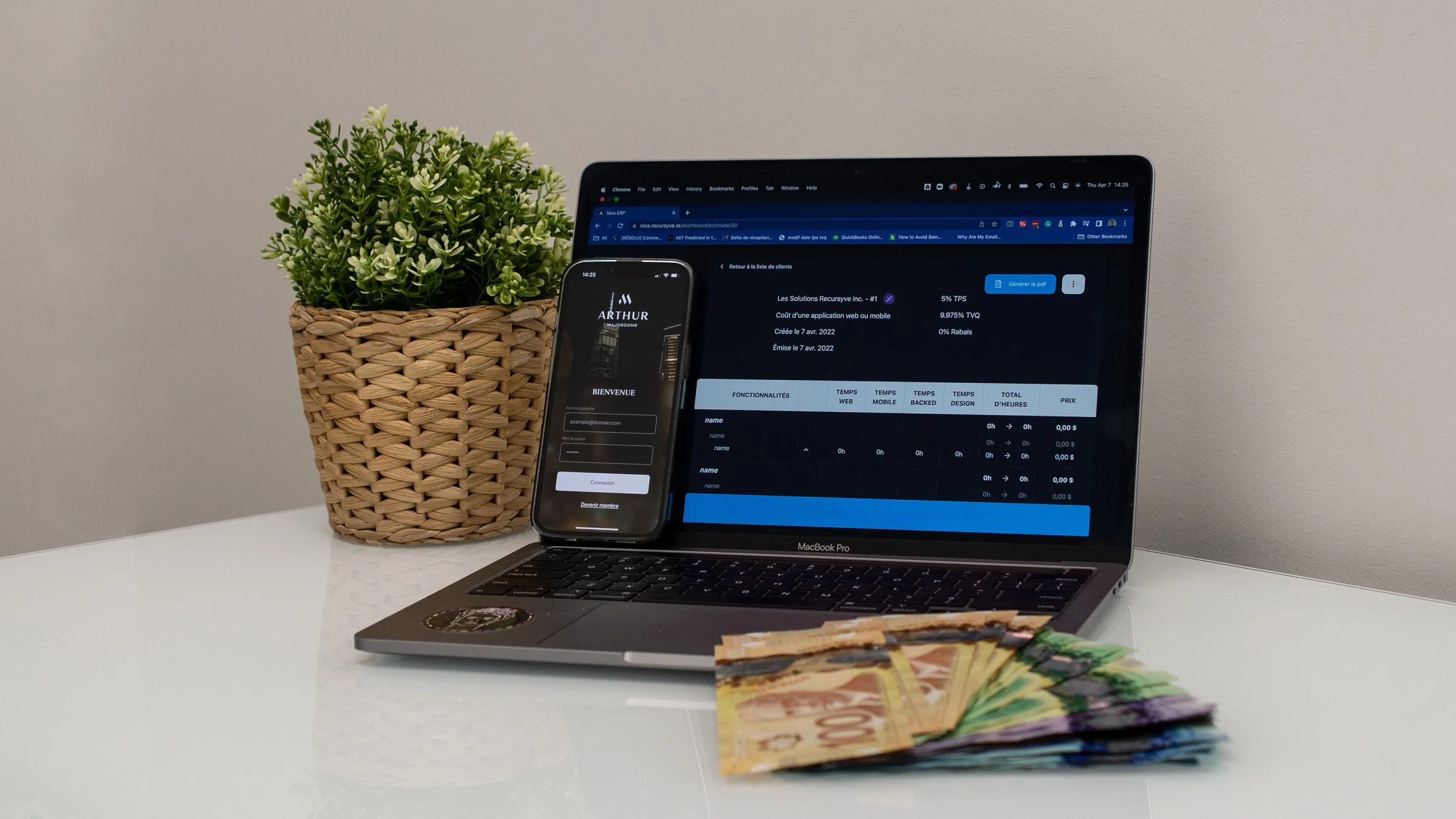
The short answer: starting at $5,000 for a simple app built with the help of AI, and up to $500,000 for a large system. The long answer: it depends.
Custom software is an app built for your own processes, rather than an off-the-shelf product your team has to adapt to. Its price is set like that of any service: based on what the firm offers, its expertise, its size and its reputation. It also depends on what you're building: the goal, the features and the people who will use it.
What has changed in recent years is the low end of the range. With coding assistants like Claude, ChatGPT, Copilot or Gemini, a team builds a first version much faster than before. What hasn't changed: software that holds up still takes engineering.
Here's how each of these factors weighs on the bill.
How much does custom software cost, and is it worth it?
The gap between $5,000 and $500,000 is wide because a custom app can serve a single simple process in your organization, or connect several.
At the low end of the range is a simple app built with the help of AI: a small internal tool, a form that replaces a shared file, a tracker for a team. At the high end, a system that connects several departments, many users and sensitive data.
Do you need to invest that much? It depends on the operations you want to handle. If your business is growing and wants to become more productive while capturing the data that supports its decisions, the answer is most likely yes. It's also what can give you a head start on your competitors.
What AI changes about the price of an app.
Development teams now work with coding assistants like Claude, ChatGPT, Copilot or Gemini. They write, explain and fix code on demand.
You can even go further: describe the app in words and let AI generate it. This is called vibe coding. In an afternoon, you get working screens.
The result: a prototype takes a few days instead of a few months, and a simple app costs much less than before. That's what puts the low end of the range at $5,000.
“An app so my technicians can fill out their work orders on the job site, with a photo and the client's signature.”


What AI doesn't change.
A prototype generated in an afternoon is not production-ready software. It shows the idea. It doesn't yet know who is allowed to see what, it isn't connected to your systems and nobody has tried it with your real data.
In custom software, what costs money is less and less the writing of code. It's understanding the real need, protecting the data, building an architecture that holds up as the business grows, getting the team to adopt the tool and maintaining it over time.
That work is becoming even more important. When code gets produced quickly, choosing what to build, and building it well, makes all the difference. AI speeds things up. Engineering keeps the software solid.
What the firm includes in its price.
Start with what's being offered. A quote can include much more than programming, and each of these elements has value.
A lower quote can come from a team that works well with AI. It can also come from what it leaves out. Ask what's included.
Before choosing a firm, establish your needs and priorities. 2 quotes that don't include the same things can't be compared.
Project management
Structured, precise follow-up, from kickoff to delivery. We cover it in Software project management that sets you up for success.
Concept and design
Screens thought through and validated with you before they're programmed.
Quality assurance
Testing so the app does what it's supposed to, including code written with the help of AI, before your users see it.
Change management
A strategy so your team truly adopts the new tool.
Support and maintenance
Someone to fix, update and evolve the app after launch.
The firm's expertise, size and reputation.
Designing an app takes expertise. The more specialized your project, the more experience matters. Look at the firm's past work before signing.
The firm's size also plays a role. A large company will probably handle your project faster, but its hourly rate is often higher than average. A freelancer costs less per hour, but the project risks taking longer, and timelines and quality are harder to guarantee. One person alone can't be an expert in every area of development.
There's now another option: doing it yourself with a vibe coding tool. For a small personal tool, that can be enough. For software at the heart of your operations, that handles your clients' data, you need someone who understands what the AI wrote and who is accountable for it.
Finally, a well-known firm often charges more. That reputation usually comes from years of work and satisfied clients, but it can also be nothing more than nice branding. Read testimonials from past clients: they speak volumes. To know what to look for in the result, see the 7 elements that define an app's quality.
What your app needs to do.
Developing an app is like launching a business: lots of variables, lots of decisions. Before you start, you need to know what it's for, who will use it, which features are essential and what data you want to capture. Each of these decisions affects the price.
Everything starts from the goal. A client portal, for example, will require online payment, access to the client's file and a channel for after-sales service. An app that centralizes your files will instead require file records, work orders, team scheduling and automatic creation of service proposals and invoices.
The more features there are and the more complex the screens, the higher the cost. AI reduces the programming time for each screen, but it doesn't decide which ones are needed.
Who you're building it for.
The type of app depends on the people who will use it. Clients need a very intuitive, polished interface. Employees need a complete interface that follows how they manage their files day to day.
These 2 audiences don't require the same design work, and it shows on the bill.
The price, or what the app brings in?
The right question isn't only what the app costs, but what it brings in. The time your employees spend repeating the same actions, the errors and workarounds caused by poorly suited tools, the experience your clients have: all of it has value.
Think like an investor: what return do you expect over 3 months, 6 months, a year? To put a number on a manual task, see 5 steps to automate a small business's processes.
And a project can move forward in stages: first a prototype, built quickly with AI, to validate the idea with your team. Then what matters most, and the rest according to your priorities. The spending is spread out and the risk is limited.
Frequently asked questions.
How much does custom software cost?
Starting at $5,000 for a simple app built with the help of AI, and up to $500,000 for a large system. The price depends on the firm that builds it (what it includes, its expertise, its size and its reputation) and on what the app needs to do (its goal, its features and its users).
Does AI lower the price of an app?
Yes, especially for a simple app. With coding assistants like Claude, ChatGPT, Copilot or Gemini, a prototype takes a few days instead of a few months. What still takes work: understanding the real need, security, data quality, an architecture that holds up as the business grows, team adoption and maintenance.
Can you build your own app with vibe coding?
For a small personal tool, often yes. Vibe coding means describing an app in words and letting AI generate it. But a prototype generated in an afternoon is not production-ready software. For a tool at the heart of your operations, you need security, testing, a connection to your systems and someone to maintain it.
Why do quotes vary so much from one firm to another?
Because they don't always include the same things: project management, concept and design, quality assurance, change management, support and maintenance. Each element has value. Compare what's included before comparing the price.
What drives up the price of an app?
The number of features and the complexity of the screens. A client portal with online payment and an app that centralizes files, work orders and invoicing don't require the same work.
The price of a custom app depends on 2 things: the firm that builds it and what it needs to do. AI has lowered the entry price, but software that holds up still takes engineering.
Compare quotes that include the same things, and think about the value the app will create over the long term, not just the initial check.
Read next
 Business and innovationHow do you build an app for your business?
 Business and innovationGetting software implementation right in your business
 Business and innovation7 good reasons to entrust your digital project to an outside firm
An idea in mind?
Let’s chat!