5 key factors to promote mental health at work
To promote mental health at work, you ensure a healthy environment, maintain good communication, recognize your talents, encourage rest periods and above all, talk about it. Here's how each of these 5 factors plays out day to day, including at Recursyve.


Everyone has mental health, and it deserves to be taken care of. Many aspects of life can affect it, including work.
The good news: an organization has several levers to make work a support rather than a burden. Here are 5 key factors that promote mental health at work.
Facteur 1Ensure a healthy environment.
Providing a healthy work environment brings major benefits to your talents' health. Working conditions, training, elements of culture: talents need to feel good when they work.
The goal is to ensure psychological safety. All talents have the right to share their ideas and opinions, to make mistakes and above all, to be vulnerable. They need to feel free to be themselves.
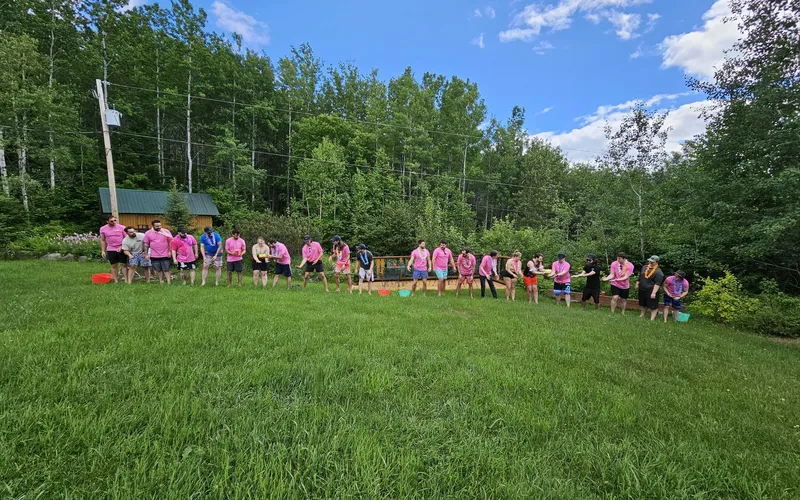
Social gatherings help people open up freely and without awkwardness. Through gatherings and team activities, talents get to know each other and trust their colleagues more easily. You need to create a sense of closeness.
Facteur 2Maintain good communication.
It's often said: communication is the key to success. That's also true for mental health at work.
Everyone goes through harder times. Knowing you can talk about it and be heard helps you get through it. Confiding in a colleague or your direct supervisor means you don't keep everything bottled up, and can then act to make things better.
One-on-one meetings help create that moment. At Recursyve, every talent in the administrative department has a weekly meeting with their direct supervisor to talk about how they're doing. It can last 10 minutes or 1 hour: what matters is that everyone has a moment to express themselves. In our experience, these meetings are very rewarding, on several levels.
Facteur 3Recognize your talents.
Recognition is a key element of mental health at work. Feeling appreciated by your colleagues is a deeply human need. A simple thank-you, a paid meal, congratulations: every gesture counts.
Recognition boosts motivation, gives meaning to work, engages the person and stimulates creativity and innovation.
And it isn't reserved for management. All talents, whatever their role, are encouraged to show recognition. These gestures all have the same value.
Facteur 4Encourage rest periods.
An overloaded schedule, overtime, no vacation: none of that helps mental health.
Some times of the year are more demanding, like tax season for accountants. But outside those periods, talents need to rest. Working long hours nonstop doesn't help productivity, quite the opposite. In the long run, it's even worse: fatigue sets in, tasks get done halfway and unusual mistakes start to appear.
So you need to encourage talents to rest, to preserve their mental health and recharge their batteries. And if the team is swamped all year, the solution isn't always to ask for more: sometimes, it's to look at which repetitive tasks could be lightened.
Facteur 5Talk about it and inform your talents.
Finally, the element that seems trivial but is the most important: talk about it. Mental health should no longer be a sensitive topic in your organization.
If it still is, raise awareness in your teams, get informed, then give them the tools they need. Many resources exist to put initiatives in place and learn more. CMHA Mental Health Week, every year in May, is a great opportunity to start the conversation, but the topic deserves more than one week a year. Don't hesitate.
Frequently asked questions.
How do you promote mental health at work?
With 5 key factors: ensure a healthy environment, maintain good communication, recognize your talents, encourage rest periods and talk about it openly so it's no longer a sensitive topic.
What is psychological safety at work?
It's when each person feels free to share their ideas and opinions, to make mistakes and to be vulnerable, without fear. Social gatherings and team activities help build it.
Do one-on-one meetings really help?
Yes. Knowing you have a moment to say how you're doing helps you get through difficult periods. At Recursyve, every talent in the administrative department has a weekly meeting with their direct supervisor, from 10 minutes to 1 hour depending on the need.
Does recognition have to come from management?
Not only. All talents, whatever their role, are encouraged to show recognition, and these gestures all have the same value.
Why encourage rest periods?
Because working long hours nonstop doesn't help productivity. In the long run, fatigue sets in, tasks get done halfway and unusual mistakes start to appear.
A healthy environment, open communication, recognition, rest and the courage to talk about it: none of these factors costs a fortune, but together, they change a team's day-to-day life. Everyone can promote good practices at work. We care deeply about our talents' mental health.
Read next
 Talent and cultureWhat is a good company culture?
 Talent and cultureWhat is Talent & Culture? And why it's not just HR
 Talent and cultureDon't fall into these traps that hold back your creativity
An idea in mind?
Let’s chat!